Home Automotive High-tech button Marketing Communications Web Sites + Interactive Instructional Design Corporate Communications Nicaragua Resume Contact
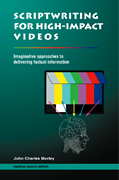
Scriptwriting for High-Impact Videos
(New Second Edition)

By JOHN MORLEY

* Publisher: iUniverse, Incorporated
* Pub. Date: February 2008
* ISBN-13: 9780595449385
* 325pp

Purchase from Barnes & Nobel

Purchase from Amazon

Table of Contents and Preface

1. REALITIES OF THE MARKETPLACE, 1
The Invisible Giant, 1
Current Opportunities, 4
What Scriptwriters Write, 5
A Mix of Disciplines, 6

Current Challenges, 8
Techno-bias, 8
It Seems So Easy, 9
Growing Pains, 10

The Power of the Moving Image, 12
Harnessing the Power, 18
2. INITIAL DECISIONS, 27
The Process, 27
Summary of the Process, 29
Differences and Variations, 29
The Case Studies, 30
Operative Concepts, 32
Video Commandments, 33

Comfort Factor-Buttoning Down, 35
Professionalism, 35
Know Who You're Talking To, 36

Needs Analysis, 42
Research, 44

Getting to Know Your Client and/or Content Expert, 44
Interviewing Your Client and/or Content Expert, 45
Research Questions, 47
Working the Questions, 48
Additional Research, 61

Determining the Budget, 63
How Big a House?, 63
Understanding the Budget, 64

Different Media for Different Needs, 65
Video, 65
Film, 66
Interactive Video, 67
PowerPoint, 67
Multimedia, 70
Business Theater, 71
Speaker Support, 71

Summary of Planning Tasks, 72
Writing A Project Proposal, 73
Collateral Material, 77
Project Proposal Approval, 79

3. ANOTHER STARTING POINT, 80
Beginning With A Creative Treatment, 80
Research Needed for a Creative Treatment, 81

The Reality Backlash, 84
Acknowledging "The People", 87

Turning Facts Into Ideas, 90
The Creative's Paradox, 92
Writing Behavioral Objectives, 95
Finding the Central Idea, 98
Finding the Emotion, 100
Making a Content Outline, 101
Creating a Language List, 104

Learning From Other Disciplines, 106
4. PACKAGING IDEAS, 115
Creative Treatment, 115
Why Bother?, 115
The Treatment Format, 118
As A Selling Tool, 120
As Creative Writing, 122
Developing Your Voice, 122

Different Styles for Different Media, 126
Video, 127
Film, 128
Interactive Video, 129
Slide-Tape, 130
Multi-image, 134
Business Theater, 136
Speaker Support, 138

5. SEVEN STRATEGIES FOR IMPROVING ANY TREATMENT, 140
1. Create an Emotional Experience, 140
2. Tell a People Story, 142
3. Make It Positive, 144
4. Work Within the Culture, 147
5. Convey Ideas, Not Words, 151
6. Show, Don't Tell, 153
7. Use Humor, 154

6. STRUCTURE, 157
Format Templates, 159
Voice-overs, 159
On-camera Spokesperson, 162
Interviews, 166
Documentary, 172
Genres and Parodies, 175
Comedy, 178
Specialized Formats, 188

Elements of Structure, 190
Premise - The Idea That Starts the Story, 191
Ending, 194
Central Idea/Spine, 196
Theme Line, 198
Image System, 200
Continuity/Flow, 204
Applying the Elements of Structure, 208

7. DRAMATIZATIONS, 211
The Power of Examples, 213
Aristotle's Six Elements of Drama, 214

Opsis, Melos: Sight and Sound, 215
Muthos and Dramatic Structure, 216
Ethos, Dianoia and Interesting Characters, 220
Lexis and Writing Dialogue, 223
8. ON TO SCRIPTING, 228
Pitching the Creative Treatment, 228
Presentation, 231
Presentation Techniques, 232
How Many Approaches?, 233
Disagreeing Without Being Disagreeable, 234

Developing the Blueprint, 236
Page Formats, 237

9. PICTURES AND WORDS, 245
Thinking Visually, 245
Visual Humor, 247
Image Systems, 248
Specifics on the Screen, Abstracts on the Track, 249
Body language, 250

Painting With Sound, 252
Wordsmithing, 254
Open Strong - Go for the Jugular, 254
Grammatical Decisions, 255
Write Tight, 260
Pacing and Flow, 265
Specific Techniques, 267

Editing Your Script, 273
Pitching Your Script, 275

Rewrites and Salvage Jobs, 277
Word Changes, 277
Rewriting for Language, 278
Structural Rewrites, 280
Creative Rewrites, 281

10. LIFE IN THE FOODCHAIN, 284
The Corporate Environment, 284
Guaranteed Non-Failures, 285
No Dull Subjects, 286
Exploitation, 287

Ethics, 290
Just Do It, 291
Alternatives to Saying No, 292
Do They Need What They Want?, 294
Get the Bad News Out Early, 295

Legal Considerations, 297
Copyright, 297
Work for Hire, 299
Fair Use, 299

Where the Jobs Are, 301
The Business of Writing, 303

Staying Fresh, 303
Scripts Are Never Finished, 304
Working Freelance, 305

Taking Initiative, 311
APPENDIX, 312
Research Questions, 313
Case Study #1, 317
Case Study #2, 331
SUGGESTED READING, 337
PERIODICALS, 340
ORGANIZATIONS, 340
GLOSSARY, 341
(top of page)
It’s not the glitz on the screen but the impact on the audience that’s the measure of an informational program. This book will help writers strengthen that impact by showing them how to make the best use of their time and creativity. It suggests hundreds of ideas that can be used as starting points and insightful touches. It covers all of the analytical and creative decisions that add up to an effective script for a video.
The skills taught in this book are also critical when scripting for film, PowerPoint® presentations, Web sites and other types of interactive media. And specific advice is provided on adapting these skills to those media.
The central focus, however, is on video, and readers are assumed to have a basic understanding of video production and writing skills.


Unique Features
  • Prepares the reader for an area of employment that is widely perceived as offering more job potential for a writer than the entertainment industry and broadcast journalism combined.
  • Presents a step-by-step creative process within the context of writing for a living, offering many techniques for presenting and discussing ideas, and for building group consensus.
  • In plain language, lays out the basics of dramatic structure, advertising concepts and instructional design as they can be applied to informational video.
  • Includes dozens of suggestions that provide a head start on developing a creative approach.
Overview of Content
Chapter 1 provides a background, history and overview of the realities of the current market.

Chapters 2 through 9 present a step-by-step process for taking a project from initial needs analysis to a completed script. The creative process is at best organic and the creation of video presentations requires the balancing of several interconnected, shifting variables. In this book the process is made as linear as possible and steps are grouped into specific training areas—while still allowing for contingencies of content, application, creative approach and working situation.

Chapter 10 provides advice on finding employment and reviews the major legal, ethical and career decisions faced by a scriptwriter.


The Profession as It's Currently Being Practiced
This book describes the realities of human frailties, time pressure and budgetary limitations rather than a rigid process for idealized situations. It prepares the reader for situations in which clients, content experts and even colleagues may not agree on—or even be aware of—accepted conventions. The ideas and techniques presented are based on over two decades of experience during which no two projects were alike and none was ideal.
The process on which this book is based has been presented and discussed in trade-show and convention seminars, and while teaching informational scriptwriting at California State University, Northridge. It has been refined during hundreds of projects and discussions with working professionals, who are seldom shy about pointing out any weakness.
This is proven advice that works under pressure. It can be applied with confidence by anyone seriously interested in writing for video—whether their concerns center on earning a living, making a difference or some combination thereof

Case Studies
Following its own advice—to show rather than tell—the text illustrates every major point by applying it to both of two case studies. This approach gives the reader a constant frame of reference as each new step builds on previous steps. The finished scripts for the case studies—a voice-over narration and a dramatization—are included in the Appendix.
In addition to these two case studies, a wealth of examples from dozens of other scripts are used to clarify points throughout the text.


A Tool for Working Writers
This is more than a good how-to textbook; it is also a reference source that can be used often—for ideas to blast past writer’s block, for help with selling words and ideas to clients and colleagues, and for insight into a process that keeps making more sense the better it’s understood and the more it’s practiced.

Terminology
A continuing challenge in this industry is deciding what to call informational video. Contenders include non-broadcast, corporate video, private television, multimedia and non-entertainment television. All work well in specific situations. All have their limitations. Informational video will be used as the umbrella term to include all of the above and the amorphous industry this book addresses.
Every show has a writer, a producer, a client and several other more or less talented accomplices. Any number of these roles may be played by a single individual, but for the purposes of this book these roles are considered separately.


Acknowledgments for the First Edition
Perspective becomes clouded after so many words; escaping that fog was possible only with the help of several reviewers: Dan Mueller, The Lawrence Company; Joseph R. Chuk, Kutztown University; Stan Denski, Indiana University, Indianapolis; Mark Hall, Butte Community College; Michael J. Havice, Marquetter University; Robert Main, California State University, Chico; and David H. Ostroff, University of Florida. Their insight and their dedication to both teaching and the moving-image media have been invaluable in creating an effective tool for learning.

Becky Hayden, publisher, and the production team Elaine Brett; copy editor, Kaelin Chappell, designer; and Sandra Craig, production editor-have been valiant in coaxing an intractable scriptwriter into the conventions of publishing.

Special thanks must also go to Alan Armer, CSUN, for the opportunity to teach and the encouragement to finish this book; Marc Tapper and Glen Otto for the opportunity to lecture at UCLA; Chuck Holmes, Corporate Strategies for being as close to a mentor as I've ever enjoyed; Don Wrege, Eye Songs for incisive comments that were pivotal in shaping the tone and voice of this book; and most of all, thanks to all of my clients, who have provided the opportunities and experiences on which this book is based.


Acknowledgments for the Second Edition
Having a book published can change your life. My gratitude goes out to everyone I have met through this book who has changed my life in so many positive ways.
Massive gratitude must also flow to my wife and life partner, Millie, for her support, suggestions and putting up with me lavishing time on writing projects that required sacrificing time that I would prefer to be spending with her. And a sincere thank you goes out to my clients and colleagues who have allowed me to practice and refine the ideas in this book.


About The Author
John Morley's been there. From working on staff in university video studios to freelancing for Fortune 500 companies. Along the way, over 300 of his video scripts have been produced. He has taught scriptwriting in corporate seminars and at the university level, and developed scriptwriting software used by thousands of writers.
After earning his BA in Broadcasting from the University of Florida, Morley worked as a writer/producer in school-based production facilities at Santa Fe Community College in Gainesville Florida, University of Florida and University of South Carolina.
A move to Atlanta to work with Jack Morton Productions brought projects from Home Box Office, Milliken Textiles, Georgia Pacific, and a transition into writing full-time. Since moving to Los Angeles in 1984, Morley has been working with clients including CitiBank, Mattel, Pioneer Electronics, and most of the Asian car companies, including Toyota, Lexus and Nissan.
In Los Angeles, Morley studied with the top screenwriting gurus, Robert McKee, Michael Hauge and John Truby. He developed a seminar on informational scriptwriting that was offered through Trudy's Writer's Studio and at numerous industry events, and he taught informational scriptwriting at California State University, Northridge.
His script-formatting software, Script Werx, is used around the world by writers working for corporations, government agencies, non-profits and television shows, including Saturday Night Live.
(top of page)
Copyright © 2008, John Morley, all rights reserved